Exploring the Benefits of Stainless Steel in Wire Forming Processes
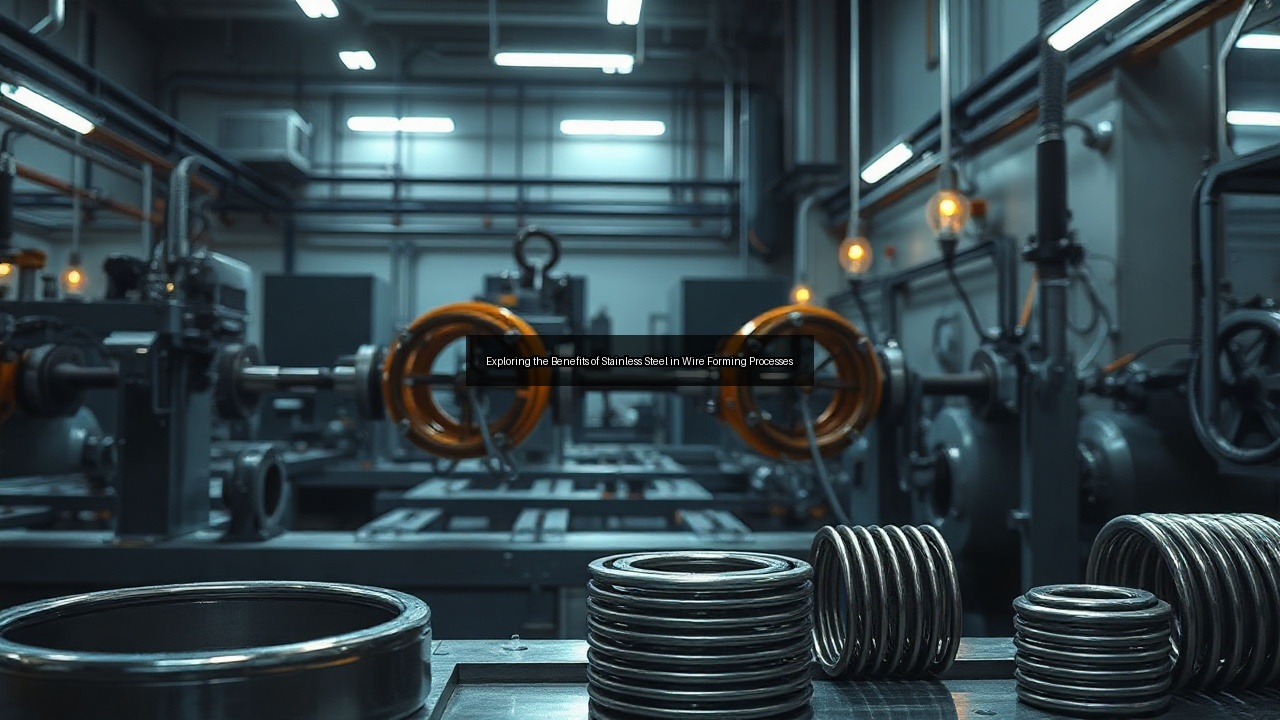
Understanding Stainless Steel and Its Role in Wire Forming
Properties of Stainless Steel
Stainless steel stands out for its remarkable corrosion resistance, durability, and strength, making it an ideal material for wire forming processes. Composed primarily of iron, chromium, and nickel, stainless steel exhibits properties that enhance its performance in various applications. The addition of chromium creates a thin layer of chromium oxide on the surface, which protects the steel from rust and oxidation. This unique chemical composition allows stainless steel to maintain its integrity even in harsh environments, making it suitable for both indoor and outdoor applications. Its high tensile strength ensures that formed wire retains its shape and functionality under stress, which is crucial for components like springs or structural supports.
Advantages Over Other Materials
Choosing stainless steel for wire forming offers several advantages over alternative materials such as carbon steel or aluminum. Stainless steel’s superior corrosion resistance means that products remain functional longer, reducing maintenance costs and the need for replacements. Unlike carbon steel, which can rust quickly when exposed to moisture, stainless steel can withstand extreme temperatures and corrosive environments without deteriorating. Additionally, stainless steel has excellent weldability and can be easily shaped into intricate designs, which enhances its versatility in engineering applications. These qualities make stainless steel wire forms a preferred choice for industries that prioritize longevity and reliability, such as aerospace and automotive sectors.
Common Applications in Wire Forming
Wire forming processes utilizing stainless steel find applications in various sectors. Coil springs are a prime example where stainless steel excels due to its ability to withstand repeated stress without losing elasticity. In the automotive industry, stainless steel wire forms are used in wire formed critical components like brake lines and fuel lines, where reliability is paramount. The aerospace sector also demands high-performance wire shapes for structural integrity and safety in aircraft components. Additionally, prototyping and engineering teams leverage stainless steel for creating custom wire forms that meet specific design requirements, ensuring they can test and refine their concepts effectively. Overall, the diverse applications of stainless steel wire highlight its significance in modern manufacturing.
Wire Forming Processes Utilizing Stainless Steel
Overview of Wire Forming Techniques
Wire forming encompasses a range of techniques aimed at producing specific wire shapes and configurations. Common methods include bending, coiling, and drawing, each tailored to achieve the desired diameter and tolerances. Bending involves reshaping a straight wire into curves or angles, while coiling creates loops or springs. Drawing, on the other hand, reduces wire diameter by pulling it through a series of dies, allowing for precise thickness control. These techniques, when applied to stainless steel, result in wire forms that not only meet design specifications but also exhibit the material’s inherent strength and corrosion resistance. The choice of technique depends on the application and the required properties of the final product.
The Importance of Diameter and Tolerances
Achieving the correct diameter and tolerances in wire forming is critical for ensuring that the final product performs as intended. Tolerances refer to the allowable deviations from specified dimensions and play a vital role in applications where precision is non-negotiable. For example, in aerospace and automotive industries, even a slight variation in wire diameter can impact functionality and safety. Stainless steel’s malleability allows for accurate shaping without compromising its structural integrity. Manufacturers often use advanced measuring tools to ensure that formed wires meet exact specifications, and this meticulous attention to detail enhances product reliability across various applications.
Computer Numerical Control (CNC) in Wire Forming
Computer Numerical Control (CNC) technology revolutionizes wire forming processes by providing unparalleled precision and automation. CNC machines utilize programmed instructions to manipulate wire shapes, allowing for complex geometries that would be challenging to achieve manually. This technology significantly reduces production time while maintaining high accuracy in wire forming. CNC systems enable manufacturers to produce consistent wire forms that meet the tight tolerances required in fields like aerospace and medical devices. The integration of CNC technology in wire forming not only wire forming method improves efficiency but also enhances the capability to create customized wire shapes that cater to diverse engineering needs.
Applications of Stainless Steel Wire Forms
Coil Springs and Their Benefits
Coil springs represent one of the most common applications of stainless steel in wire forming. These springs are essential components in various mechanical systems, providing resilience and support. Stainless steel coil springs offer significant benefits, including high fatigue resistance, which allows them to endure repetitive loading without failure. Their ability to maintain performance in extreme temperatures and corrosive environments makes them ideal for use in automotive suspensions and industrial machinery. The flexibility of stainless steel enables engineers to design springs that can be tailored to specific load requirements, enhancing overall system performance. As a result, stainless steel coil springs play a crucial role in ensuring the reliability of engineered products.
Aerospace Industry Needs
The aerospace industry demands stringent safety and performance standards, making stainless steel wire forms indispensable. Components such as control cables, landing gear, and structural supports rely on the strength and durability of stainless steel. The material’s lightweight nature combined with its resistance to corrosion ensures that aircraft components can withstand the rigors of flight while maintaining structural integrity. Engineers often choose stainless steel for its ability to perform under varying environmental conditions, from extreme altitudes to high humidity. Moreover, prototyping with stainless steel wire allows for rapid testing and development of innovative aerospace designs, ultimately leading to safer and more efficient aircraft.
Prototyping and Engineering Challenges
In the realm of engineering and prototyping, stainless steel wire forms present unique challenges and opportunities. Engineers often face the task of creating custom wire shapes that adhere to specific design criteria. Stainless steel's versatility in wire forming allows for the development of innovative prototypes that can be tested for performance and durability. However, engineers must also navigate the complexities of selecting the appropriate stainless steel grade, ensuring that the formed wire meets the necessary requirements for strength and corrosion resistance. Prototyping with stainless steel wire not only aids in refining designs but also accelerates the development process, enabling faster transitions from concept to production. This adaptability makes stainless steel a favored choice in the engineering community.
Choosing the Right Stainless Steel for Wire Forming
Factors to Consider When Selecting Stainless Steel Brands
Selecting the right stainless steel brand for wire forming involves evaluating several critical factors. The intended application plays a significant role; for instance, aerospace applications may require specific alloys that meet stringent industry standards. Engineers should consider mechanical properties such as tensile strength, yield strength, and fatigue resistance to ensure compatibility with the design requirements. Additionally, the manufacturing process must align with the chosen stainless steel grade, as some brands may have better machinability or weldability than others. By researching various stainless steel brands and their performance characteristics, manufacturers can make informed decisions that enhance the efficacy of their wire forming projects.
The Role of Extrusion in Wire Shaping
Extrusion serves as a vital process in shaping stainless steel wire, allowing for the production of complex profiles and cross-sections. During extrusion, stainless steel billets are heated and forced through a die, resulting in continuous lengths of wire with uniform diameters. This method not only streamlines the manufacturing process but also improves the material's mechanical properties through work hardening. The ability to produce wire with specific characteristics tailored to the application enhances the overall reliability of the final product. Engineers often leverage extrusion techniques to create wire forms that meet exact specifications, making it an essential aspect of modern wire forming processes.
Threading Techniques for Optimal Performance
Threading techniques play a crucial role in enhancing the functionality of stainless steel wire forms. Proper threading ensures that components can be securely fastened and assembled, which is vital in applications ranging from construction to automotive manufacturing. Various threading methods, such as cut threads and rolled threads, can be employed depending on the application's requirements. Rolled threads, for example, provide greater strength and are more resistant to wear compared to cut threads. Selecting the right threading technique enhances the performance and longevity of stainless steel wire components, contributing to their effectiveness in demanding environments. By focusing on precise threading methods, manufacturers can ensure optimal performance and reliability in their wire formed products.